38 label the atp molecule
atp molecule labeled - DaVinci Custom Linear Fireplaces Label each part of the atp molecule illustrated below. In the yeast Schizosaccharomyces pombe the FANCM-family DNA helicase FmI1 directs NCO recombination formation during meiosis. u Based on these helicase motifs, a number of helicase superfamilies have been distinguished. In: Spies, M. Photosynthesis: Crash Course Biology #8 - YouTube Hank explains the extremely complex series of reactions whereby plants feed themselves on sunlight, carbon dioxide and water, and also create some by product...
Unit 7.pdf - 1. Draw and label an ATP molecule. Make sure... Draw and label an ATP molecule. Make sure to include the 3 parts. 2. What is the process called when a phosphate is added to the ADP molecule a. Photosynthesis b. Phosphorylation c. Permeability d. Precipitation. 3. The metabolism (breakdown) of _____ in the mitochondria provides the energy for the phosphorylation of ADP. a. ATP b.
Label the atp molecule
Physiology, Adenosine Triphosphate - StatPearls - NCBI Bookshelf The body is a complex organism, and as such, it takes energy to maintain proper functioning. Adenosine triphosphate (ATP) is the source of energy for use and storage at the cellular level. The structure of ATP is a nucleoside triphosphate, consisting of a nitrogenous base (adenine), a ribose sugar, and three serially bonded phosphate groups. ATP is commonly referred to as the "energy currency ... Model of ATP Molecule | Perkins eLearning The model described is of a molecule of ATP (adenosine triphosphate) which is the energy currency of the cell because it provides energy for the cell's activities. Understanding the structure of this molecule leads to a clear understanding of the manner in which it provides needed energy to the cell. This model was created by. CR Study guide.pdf - 1. Draw and label an ATP molecule.... 1. Draw and label an ATP molecule. Using your drawing as a diagram, explain how ATP molecules release energy (including the enzyme responsible). 2. Why is ATP important? ATP is important because it supplies energy for our cells; without it we would not have the energy to grow, move, etc. Ribose P Adenine P
Label the atp molecule. Solved 1. Draw and label an ATP molecule. Using your drawing - Chegg Question: 1. Draw and label an ATP molecule. Using your drawing as a diagram, explain how ATP molecules release energy. 2. How is ADP different from ATP? ADD has 2 phosphate ATP has 3 phosphate 3. Explain why glucose is important. groups groups 4. What is glucose broken down into during glycolysis? 5. Where does glycolysis occur? = 6. Solved Label the appropriate images in the ATP cycle. Place | Chegg.com Label the appropriate images in the ATP cycle. Place your cursor on the boxes for more information adenosine diphosphate + phosphate spontaneous reactions that release energy for the formation of ATP ATP adenosine triphosphate energy released from ATP for reactions in the cell This is the energy molecule produced ADP + P Reset Zoom Describe the three parts of an ATP molecule? - Answers The parts of a molecule of ATP are:* the purine base, adenine, linked to * the sugar, ribose, linked to * a chain of three phosphate groups. ... Label the parts of an ATP molecule? Adedine, Ribose ... Photosynthesis Flashcards | Quizlet Label diagram 7 with three phases of the Calvin cycle. ... The electron from a molecule of water goes with H+ to the ATP Synthase, to which it joins the sugar G3P.
The ATP Molecule -Chemical and Physical Properties The Adenosine triphosphate ( ATP) molecule is the nucleotide known in biochemistry as the "molecular currency" of intracellular energy transfer; that is, ATP is able to store and transport chemical energy within cells. ATP also plays an important role in the synthesis of nucleic acids. For 3-D Structure of this image using Jsmol Click here ATP synthesis and storage - PMC Apr 12, 2012 · It has been calculated that, for the synthesis of one ATP molecule, four protons are required (three for the ATP synthase rearrangements and one for ATP, ADP, and Pi transport ). Once synthesized, ATP can locate inside mitochondrial matrix or be transported into the IMS by the nucleotide exchanger adenine nucleotide translocase (ANT) which ... Adenosine triphosphate - Wikipedia Adenosine triphosphate (ATP) is an organic compound and hydrotrope that provides energy to drive many processes in living cells, such as muscle contraction, nerve impulse propagation, condensate dissolution, and chemical synthesis. Found in all known forms of life, ATP is often referred to as the "molecular unit of currency" of intracellular energy transfer. Unit_7_ (2).docx - 1 Draw and label an ATP molecule. Make... 1 Draw and label an ATP molecule. Make sure to include the 3 parts. (Drawing was made on a separate piece of paper) ( Drawing was made on a separate piece of paper ) 2 What is the process called when a phosphate is added to the ADP molecule a. Photosynthesis b. Phosphorylation c. Permeability d. Precipitation
Structure of ATP - Learn Insta The ATP molecule is composed of three components. These phosphates are the key to the activity of ATP. ATP consists of a base, in this case adenine (red), a ribose (magenta) and a phosphate chain (blue). All living things, plants and animals, require a continual supply of energy in order to function. The energy is used for all the processes ... Label the parts of an ATP molecule? - Answers The three parts of an ATP, adenosine triphosphate, molecule are:A sugar (ribose)3 phosphates (the energy is stored in the unstable covalent phosphate bonds)Adenine (a double ring of carbon and... What are the three parts of the ATP molecule? - Answers A single ATP molecule is made up of three parts, adenine, ribose, and phosphates. Adenine and ribose combine to form adenosine, which is then attached to three phosphates to form the high energy ... Magnesium in biology - Wikipedia For example, ATP (adenosine triphosphate), the main source of energy in cells, must bind to a magnesium ion in order to be biologically active. What is called ATP is often actually Mg-ATP. As such, magnesium plays a role in the stability of all polyphosphate compounds in the cells, including those associated with the synthesis of DNA and RNA.
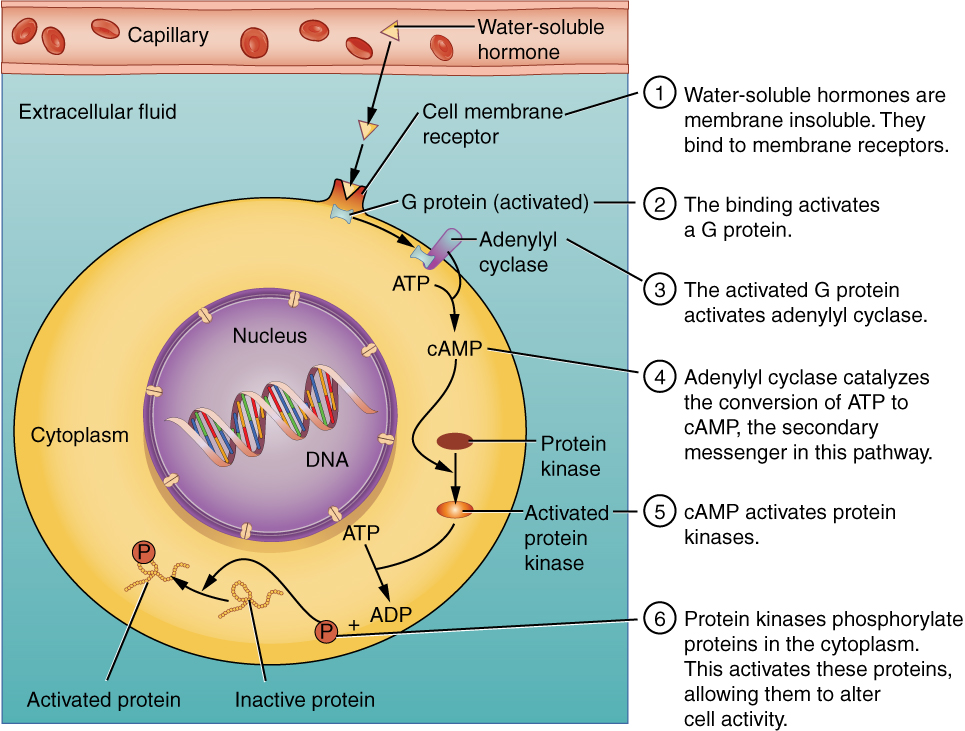
17.2 Hormones – Anatomy and Physiology
Ribose - Wikipedia Ribose is a simple sugar and carbohydrate with molecular formula C 5 H 10 O 5 and the linear-form composition H−(C=O)−(CHOH) 4 −H. The naturally-occurring form, d-ribose, is a component of the ribonucleotides from which RNA is built, and so this compound is necessary for coding, decoding, regulation and expression of genes.

5.3 Metabolic Pathways and Enzymes
PharmaCircle This website uses cookies to help provide you with the best possible online experience. Please read our Terms & Conditions and Privacy Policy for information about ...
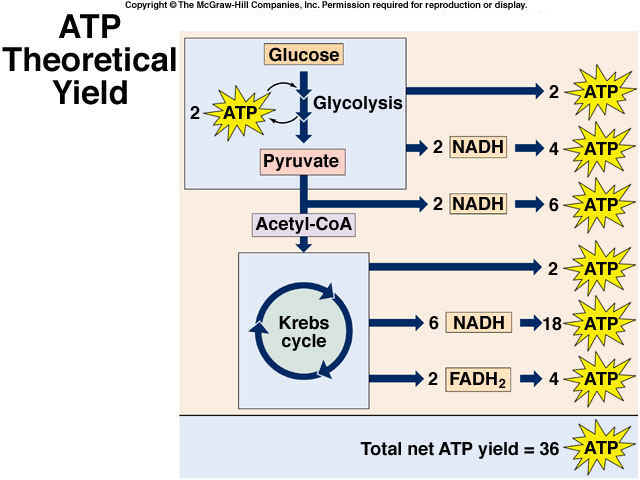
Cellular Respiration: Glycolysis, Pyruvate, Kerbs, ETC - SchoolWorkHelper
Which label identifies the part of the ATP molecule that changes when ... Answer: C; respiration. Explanation: Cellular respiration is the process by which nutrients such as glucose are broken down using oxygen to generate energy in the form of ATP, that is used to drive cellular processes.; ATP consists of an adenosine molecule bonded to three phosphate groups in a row. Energy from cellular respiration is stored in the bond between the 2nd and 3rd phosphate groups ...
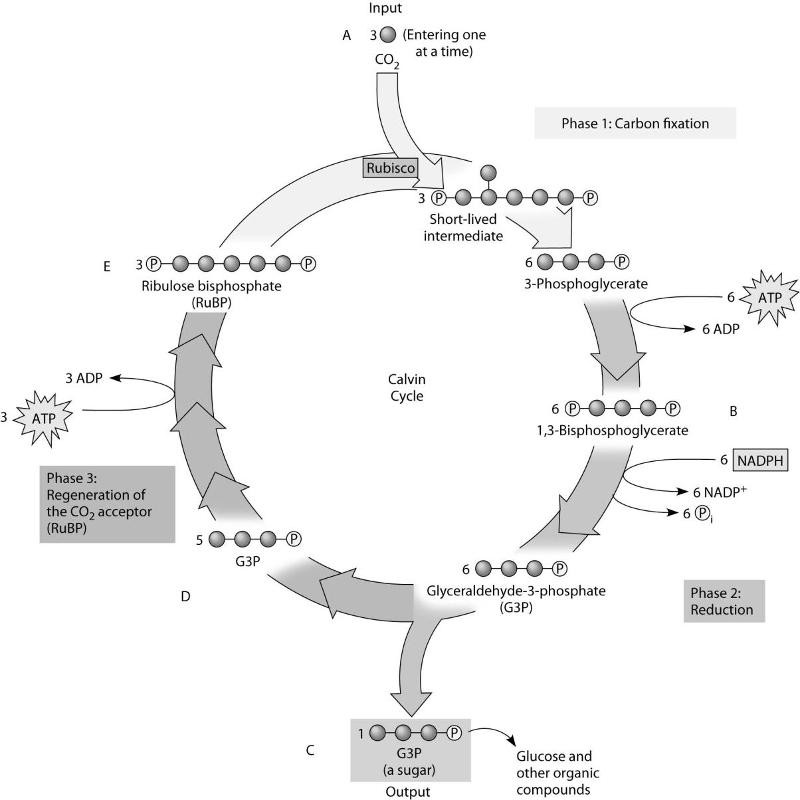
Campbell Biology 10th edition Chapter 10 Flashcards | Easy Notecards
Fluorescence Polarization Assays in Small Molecule Screening Arai et al. utilized a small molecule tracer (Cy5-W-7), instead of a labeled peptide, to configure an FP-based binding assay (Figure 2A) for calmodulin (CaM) antagonists . W-7 is a small molecule antagonist of CaM and has been shown to inhibit CaM-activated enzyme (such as calcineurin phosphatase) activity .

Quia - 9AP Chapter 10 - Photosynthesis (detailed)
Enzymes and ATP-ADP Flashcards - Quizlet Explain the purpose of a molecule of ATP and where most of the energy is stored in a molecule. the purpose for ATP carries/ stores energy for the cell function. the energy is stored in the Mitachondria. Draw the structure and label the parts of a molecule of ATP. describe the ATP- ADP cycle. Include what is and is not recycled.
Post a Comment for "38 label the atp molecule"